We at the International Shield Organization realize that activating the language and culture of dialogue is the only way to establish international peace and security.
Dialogue is the compass for managing crises between the various parties and ensuring stability.
Dialogue is a feature of civilized societies and an effective tool for solving difficult problems and enhancing social cohesion.
Dialogue is not just a discussion or conference. It’s about creating a safe space to express themselves and reveal their assumptions, perceptions, and judgments.
One of the reasons for the success of the positive dialogue process is the right people with high sponsorship, and the obstruction of any peace process lies mainly in people’s culture of dialogue.
And favoritism and their lack of awareness of the importance of dialogue
Dialogue is an effective way to communicate with family members. When parents are good communicators with their children, they have the opportunity to recognize the positive and negative aspects of themselves and their children and can contribute to changing them. Family dialogue is necessary to create an ideal family.
Justice can only be achieved by listening to individuals, listening to them, and discussing any issue or problem they share. The absence of effective dialogue means incomplete truth and distorted justice.
Exchange information, cultures, and experiences between people. Experience can only be learned and shared through dialogue, which will positively impact societies’ progress.
Therefore, we at the International Shield Organization must focus on spreading the culture of dialogue between individuals, societies, and cultures to achieve lofty humanitarian goals.
SHIELD
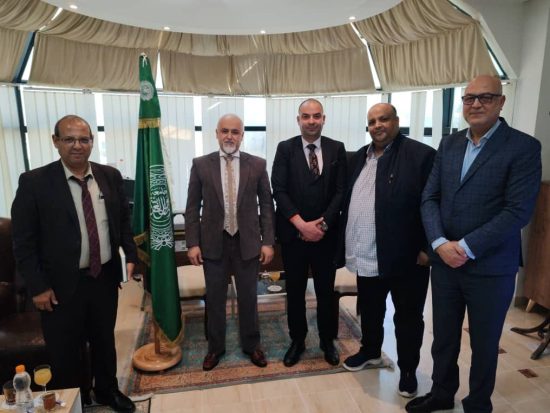
The delegation of the International Shield Organization and the Africa Commission made an official visit to the Consulate of the Republic of Tunisia in Annaba / Algeria.
His Excellency the Tunisian Consul, Dr. Sebri Chokri, received the delegation, and topics of common interest and cooperation in all fields aimed at serving and advancing humanity were discussed.
We desperately need justice, freedom, and dignity.
May everyone enjoy security, peace, and stability
As a basic and equal principle for all.
International Congress for Protecting the Rights and Freedom of Citizens SHIELD
Today, we celebrate #WorldPressFreedomDay!
A day to remind us of the importance of access to information, freedom of speech, and journalists’ safety – pillars of democratic societies.
Let’s work together for #PressFreedom to ensure a just and respectful society.


The 20th anniversary of the EU’s 2004 enlargement is an occasion to celebrate a new era. It opened doors for a generation of EU researchers to collaborate across borders and to develop their careers while advancing the frontiers of science.
Tunisia – On 04/23/2024, he received the Minister Plenipotentiary of the League of Arab States in Tunisia
Dr. Hussein Al-Suwaidi, a member of the General Body of the International Shield Organization in Africa
Many important issues and ways of cooperation in all fields were discussed.
The organization’s delegation presented to His Excellency the Minister Plenipotentiary an overview of the goals and objectives of the global organization and some of the projects planned to serve African and Arab societies. The Minister Plenipotentiary also expressed his readiness to cooperate fully with the organization.
After the meeting, His Excellency, the Minister Plenipotentiary of the Africa and Middle East Commission, wished success in performing humanitarian tasks.
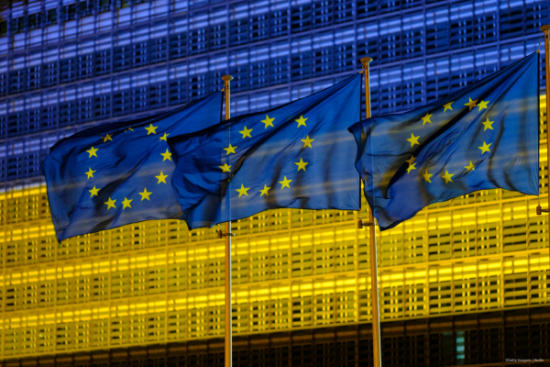
The European Union stands united in its steadfast support for Ukraine in the face of Russia’s aggressive war and illegal attempts to annex Ukrainian territory. The European Union is committed to providing political, financial, economic, humanitarian, military, and diplomatic support to Ukraine and its people for as long as possible.
A robust and comprehensive response from the European Union
In total, the support provided by the European Union to Ukraine since the beginning of the Russian war of aggression amounts to approximately 98 billion euros. This includes:
Ukraine Facility: Supporting the country’s recovery, reconstruction, and path toward accession to the European Union
To support Ukraine’s long-term efforts to recover from the war and work towards EU membership, the EU has launched a dedicated financial instrument for 2024 to 2027. The Ukraine Facility will allow the EU to provide Ukraine with up to €50. $1 billion in predictable and flexible fiscal support during this period.
While the facility’s terms are being implemented, the Commission can provide Ukraine with emergency bridge financing of up to €1.5 billion per month for a limited period. This would ensure that Ukraine can focus on winning the war while continuing to pay salaries and pensions and provide essential public services. Ukraine has already received €4.5 billion of this crucial support.
This facility confirms the European Union’s commitment to supporting Ukraine in the face of the ongoing aggressive war waged by Russia and on its path towards joining the European Union.
The International Union for the Protection of Students’ Rights is a division of the International Congress for the Protection of Citizens’ Rights and Freedoms “Shield”, whose activities are aimed at protecting the fundamental rights and freedoms of foreign students, regardless of political or religious beliefs, race, gender, skin color or social status. The Union cooperates with government agencies and educational institutions to develop relationships among students around the world.
The Union works in accordance with the principles of fairness and equality to create an atmosphere of mutual respect within the educational process. Its activities are aimed at:
- control over violations of students’ rights in educational institutions of various levels of accreditation;
- fight against corruption in educational institutions;
- education and strengthening of moral values, creating the necessary conditions for the spiritual and physical development of students
- support for student initiatives in the social and public spheres of activity, in science and education, support for business activity and creative self-realization of students.
To maintain friendship, mutual understanding and cooperation between all students, the unity of the student community, the development of cooperation and dialogue between them, the International Union for the Protection of Students’ Rights organizes conferences, seminars, round tables and cultural events aimed at exchanging information and experience in various fields: educational, healthcare, financial, legal, cultural, etc.
The Union cooperates with government agencies of Ukraine to identify and eliminate corruption that directly violates the right to education.
Contact information for the International Union for the Protection of Students’ Rights:
Tel. (048) 780-13-04, (096) 760-34-73
E-mail: shieldcongress@gmail.com
Overview
Expanding on the Director-General’s report to the World Health Assembly in May 2023, this paper provides a two-part summary of the initiatives that are now underway to strengthen the global HEPR architecture. Part I provides an overview of the Member-State driven processes to reform the governance of HEPR at the global level; new mechanisms to secure sustainable financing for health emergency preparedness and response; and introduces a new concept – the five Cs – that will guide the strengthening of the national, regional and global operational systems of HEPR. Part II provides a more detailed exploration of each of the five Cs, and the next steps that we must take to accelerate the implementation of the HEPR framework at the national level, in order to meet the pressing needs of communities affected by and at risk of health emergencies now and in the years to come.

Without respect for human rights, there can be no sustainable development, and one of these rights is quality primary education, of which literacy is a part. The issue is not the exercise of an individual right, as an adult or a child, but the issue of getting to a point where societies see the fulfillment of these rights as indicative of sustainable development. This general method should be seen for policy formulation at the national level, with particular attention to the intricacies and implications of educational systems as a rights-based method.
Literacy goals cannot be achieved under these circumstances. Education for sustainable development seeks to build skills and values ?? for peace in the minds of the human race, as deposited in the UNESCO charter. The country is an area, and the rural population in it constitutes a high percentage of the total population. Education in the countryside differs from education in the cities in terms of quantity and quality.
The discrepancy in the enrollment of educated people, especially between boys and girls, and between urban and rural areas, and from multiple ethnic origins and different economic conditions, as there are many villages still deprived of school buildings that meet the purpose, so the expansion of education in rural areas and improving its quality.
To make it more suitable for life in the countryside and serve the goals of integrated development, except for some modest and specific attempts implemented by educational institutions.