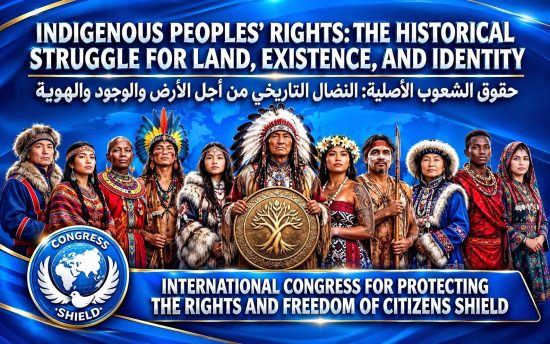
Voices of the Forgotten Lands: Safeguarding Identity and Justice in the Face of Contemporary Marginalization
The issues facing Indigenous peoples represent a living extension of the roots of human history and a fundamental line of defense for the planet’s biological and environmental diversity. As contemporary challenges arising from resource extraction projects and globalization continue, there is an increasing need for a balanced human rights and diplomatic discourse that places the rights of these communities at the forefront of international justice priorities.
Grounded in the universal principles of human rights, and firmly believing that cultural, ethnic, and religious diversity represents a human asset and a source of strength and social cohesion, International Congress – SHIELD affirms that respecting differences and combating discrimination are fundamental to justice, peace, and stability.
The rights of Indigenous peoples lie at the heart of these principles, as an inherent right to land, existence, identity, culture, and dignity. Historically, and to this day, Indigenous communities have faced various forms of marginalization, displacement, exploitation, and loss of their lands and resources, alongside threats to their languages, traditions, and ancestral knowledge.
Protecting the rights of Indigenous peoples requires recognition of their rights to their ancestral lands and resources, protection of their identities, languages, and cultures, meaningful participation in decisions affecting their future, and rejection of all forms of displacement or discrimination under any pretext.
The protection of these communities is also closely linked to environmental protection, biodiversity conservation, and addressing climate change, given the traditional knowledge and generations of experience they possess in safeguarding nature and its resources.
International Congress – SHIELD emphasizes that true justice cannot be achieved through exclusion or marginalization, and that all peoples and individuals are equal in dignity and rights. Accordingly, protecting Indigenous peoples is not merely a local responsibility, but a shared human and international responsibility requiring genuine political will and the transformation of international principles and instruments into practical measures that protect land, identity, and fundamental rights.
Respecting diversity means respecting humanity, and protecting the rights of Indigenous peoples means protecting an essential part of our shared human heritage.
Issued by:
Department of Media and International Relations
International Congress – SHIELD