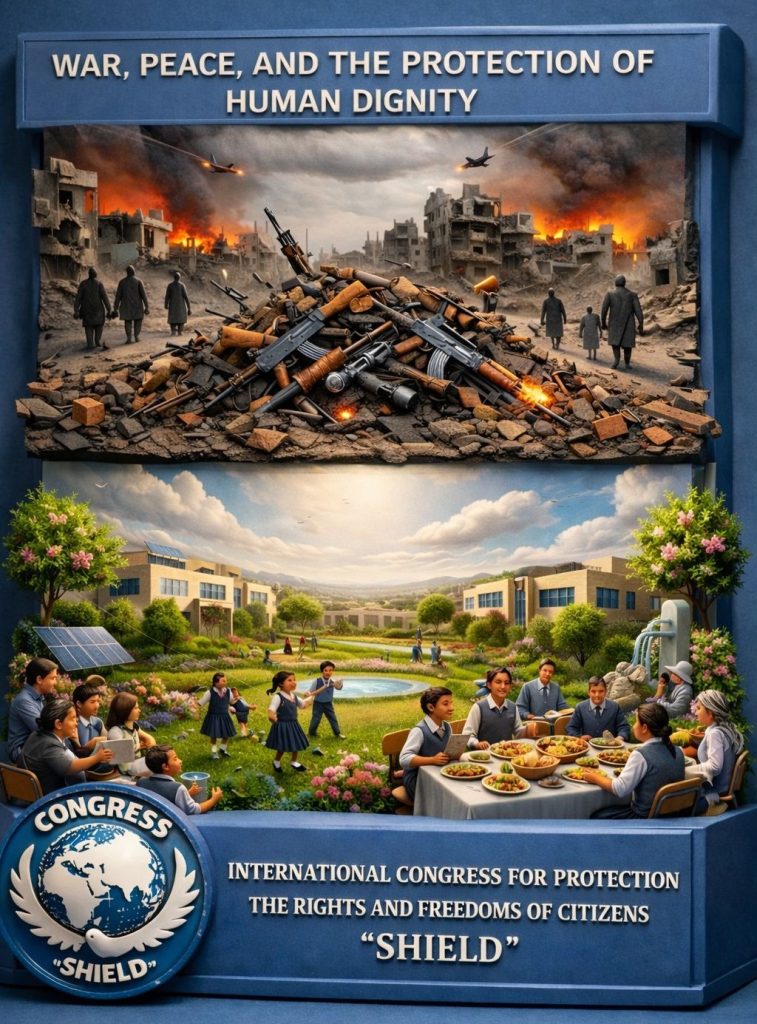
Wars and armed conflicts in the Middle East have long represented a complex humanitarian, political, and economic challenge. Ongoing conflicts not only destroy infrastructure and land but also deprive generations of their future and directly undermine human dignity.
Wars are not merely military battles; they are, above all, human tragedies. Enormous military budgets are spent annually in the form of billions of dollars on armaments, while millions of people suffer from poverty, hunger, and displacement. In some countries in the region, between 30 and 80 billion dollars are spent each year on military spending, funds that could otherwise contribute to building schools, universities, and hospitals, as well as providing jobs, food, and protection for millions of children and young people.
The Middle East is considered one of the richest regions in the world in terms of natural resources and strategic wealth, including oil, gas, and minerals, in addition to its vital geographic location linking three continents. Despite these vast resources, the region is also among the most conflict-prone areas in the world, where wars intersect with poverty, hunger, marginalization, the spread of diseases, and limited development and education.
International estimates indicate that the humanitarian situation in the Middle East remains deeply concerning due to ongoing conflicts and instability. Around 15 to 20 percent of the region’s population lives below the poverty line, while nearly 14 percent suffer from hunger or undernourishment. In addition, about 40 percent of the population experiences varying levels of food insecurity, reflecting the scale of the economic and social challenges faced by societies affected by conflict.
In terms of displacement and migration, prolonged wars over the past years have forced tens of millions of people to flee their homes internally or across borders, making the Middle East one of the regions most affected by forced displacement worldwide. At the same time, economic estimates indicate that unemployment rates in the region often range between 10 and 25 percent, with even higher rates among youth, further complicating social conditions and affecting opportunities for development and stability.
These indicators demonstrate that the cost of conflicts in the region is not limited to military or economic losses, but extends deeply into the structure of societies and the future of generations. Crises of poverty, hunger, unemployment, and displacement overlap to create one of the most significant humanitarian challenges of the modern world.
Wars leave profound consequences on societies, including:
Youth migration: Millions of young people are forced to leave their countries in search of safety or employment opportunities, leading to the loss of vital human potential.
Deterioration of healthcare systems: The collapse of health services and difficulty accessing medical treatment contribute to the spread of diseases and epidemics.
Poverty and marginalization: Loss of income sources and worsening living conditions, particularly for children and vulnerable families.
Refuge and displacement: Tens of millions of people are forced to flee their homes in search of safety and stability.
From a human rights perspective, wars represent a clear violation of international law, including the principles of the Universal Declaration of Human Rights and the Geneva Conventions, which affirm the right to life, security, dignity, and protection from violence and forced displacement.
Redirecting resources from war to development can create a real transformation in people’s lives. Investing in education, healthcare, and employment opportunities for youth contributes to building more stable and just societies.
True peace begins when human dignity and rights become a priority in policies and decision-making. Building a just and sustainable society requires strengthening awareness, supporting humanitarian initiatives, and protecting human rights under all circumstances.
The International Congress SHIELD Organization affirms that responsible leadership is that which places human beings at the center of its priorities and works to move societies from cycles of poverty and conflict toward development and stability. Governments bear the primary responsibility to protect human dignity and ensure the basic conditions for a dignified life for their people.
Human beings must come before weapons. Investing in people is the true investment in peace, stability, and human dignity.
Issued by
Media and International Relations Department
International Congress SHIELD Organization