

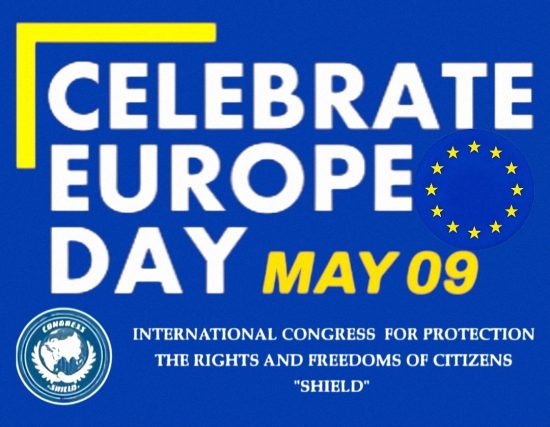
The International Congress Shield Congratulates the European People on the 75th Anniversary of Europe Day
On May 9, 2025, Europeans—together with people around the world—celebrate the 75th anniversary of the historic Schuman Declaration, which laid the foundation for the creation of the European Union and ushered in a new era of peace, cooperation, and integration among the nations of Europe.
On this significant occasion, the International Congress Shield extends its warmest congratulations to the leaders and peoples of the European Union, emphasizing the importance of this day as a symbol of solidarity and unity—values the world needs now more than ever.
The Schuman Declaration of 1950 marked a pivotal turning point in European history. It established the groundwork for a united Europe capable of overcoming conflict and division, paving the way for a partnership rooted in shared interests, respect for human rights, and the promotion of democracy.
Today, 75 years later, the European Union stands as a global model of peace, stability, and sustainable development.
EU member states are commemorating this anniversary through a wide range of activities, including opening the doors of European institutions to the public, hosting cultural, educational, and entertainment events, and lighting up iconic landmarks in the colors of the European flag.
Additionally, Expo 2025 in Osaka, Japan, features a special program dedicated to this occasion, reflecting the global significance of Europe Day.
In light of today’s global challenges, the European Union continues to serve as a pillar of stability and a source of opportunity and security for its citizens and partners.
The International Congress Shield firmly believes that the EU’s values—freedom, justice, pluralism, and international cooperation—provide a strong foundation for a better future built on peace and shared prosperity.
The organization reaffirms its unwavering commitment to promoting dialogue and mutual understanding among nations, advancing human security, and fostering a culture of peace and coexistence in collaboration with international and regional institutions—in line with the vision set forth in the Schuman Declaration.
Happy Europe Day to all—may the unity of peoples remain stronger than any challenge.
International Congress Shield – Brussels

Human rights and fundamental freedoms are cornerstone values that have shaped modern Europe, with the continent standing as a global leader in the protection of these rights. Since the signing of the European Convention on Human Rights in 1950, European countries have made significant progress in advancing human rights principles across all spheres of life. However, despite these advancements, several challenges remain in fully realizing these rights in certain European nations.
1. Legal Frameworks for Human Rights Protection in Europe
Europe serves as an exemplary model of commitment to human rights standards. The European Union and associated institutions like the Council of Europe and the European Court of Human Rights are some of the key bodies ensuring the implementation of global human rights standards within their member states. These legal frameworks include:
The European Convention on Human Rights: This foundational document guarantees individual and collective freedoms such as the right to life, freedom of expression, fair trial rights, and freedom of religion.
The Charter of Fundamental Rights of the European Union: This document extends protections to new rights, including personal data protection and gender equality.
The European Court of Human Rights: This court provides individuals with the ability to file complaints against their governments if they believe their rights have been violated, offering a key legal tool for safeguarding human rights in Europe.
2. Contemporary Challenges to Human Rights in Europe
Despite Europe’s legal advancements, several persistent challenges undermine the full realization of human rights, such as:
Migration and Refugee Issues: The refugee crisis is one of Europe’s most significant challenges, particularly with the rising number of refugees from conflict zones. In some cases, the rights of refugees and migrants face challenges related to residence and humanitarian conditions.
Racial and Religious Discrimination: Although European laws prohibit discrimination, reports indicate that racial and religious discrimination, particularly against Muslims and refugees, has been on the rise in some countries.
Security Threats and Terrorism: In response to security threats, some European countries have enacted stringent security measures that sometimes infringe upon fundamental freedoms, such as freedom of expression, freedom of movement, and privacy rights.
Digital Rights Protection: With the growing dependence on technology, protecting personal data and digital rights in the face of mass surveillance has become a key issue in Europe.
3. The Role of The Shield International Organization in Promoting Human Rights in Europe
The Shield International Organization for Human Rights plays a significant role in promoting human rights in Europe and globally. Since its founding, the organization has worked to empower individuals and communities to access justice and enjoy their fundamental rights and freedoms. Regarding Europe, the organization focuses on several key areas:
Advocating for European Governments: The organization works to influence European policies to ensure member states comply with international human rights standards and promote transparency and accountability in this area.
Awareness and Education: Through awareness campaigns, training activities, and workshops, the organization seeks to educate European citizens on the importance of upholding human rights and fundamental freedoms.
Supporting Refugees and Migrants: The organization is committed to providing legal and humanitarian assistance to refugees and migrants in Europe, as their rights remain a primary focus of its mission.
Fighting Discrimination: The organization works to promote equality and combat discrimination in Europe through programs aimed at reducing the gaps between different racial and religious groups.
4. The Vision of The Shield International Organization for Promoting Human Rights Globally
The Shield International Organization believes that the protection of human rights in Europe should serve as a model to be replicated globally. The organization is dedicated to making human rights an integral part of national, regional, and international policies, and it advocates for the advancement of international law to ensure justice and equality for all people.
In this context, the organization strives to spread the culture of human rights worldwide by working with governments, international bodies, and civil society organizations to achieve a global vision based on respect for human dignity and fundamental freedoms.
5. Conclusion
Human rights and fundamental freedoms in Europe are values that European countries strive to protect and promote. Despite ongoing challenges, Europe remains a global leader in human rights, thanks to robust legal frameworks and international mechanisms such as the European Court of Human Rights. Through the efforts of organizations like Shield International Organization for Human Rights, these values are reinforced within Europe and across the world. The organization continues to work toward the universal implementation of these fundamental principles, ensuring that all people, regardless of location or circumstance, enjoy their basic rights and freedoms.

Dialogue between cultures and civilizations is vital to building inclusive, peaceful societies free from religious hatred. Dialogue between cultures is essential to promoting freedom of religion or belief and combating religious intolerance and violence.
It is also a powerful tool in resolving conflicts and building peace. It provides a platform for parties involved in the battle to express themselves.
About their opinions, grievances, and aspirations. This open communication can help break down the barriers of misunderstanding and mistrust that often fuel conflict.
By promoting understanding, dialogue can help ease tensions and pave the way for peaceful coexistence.

[:en]