
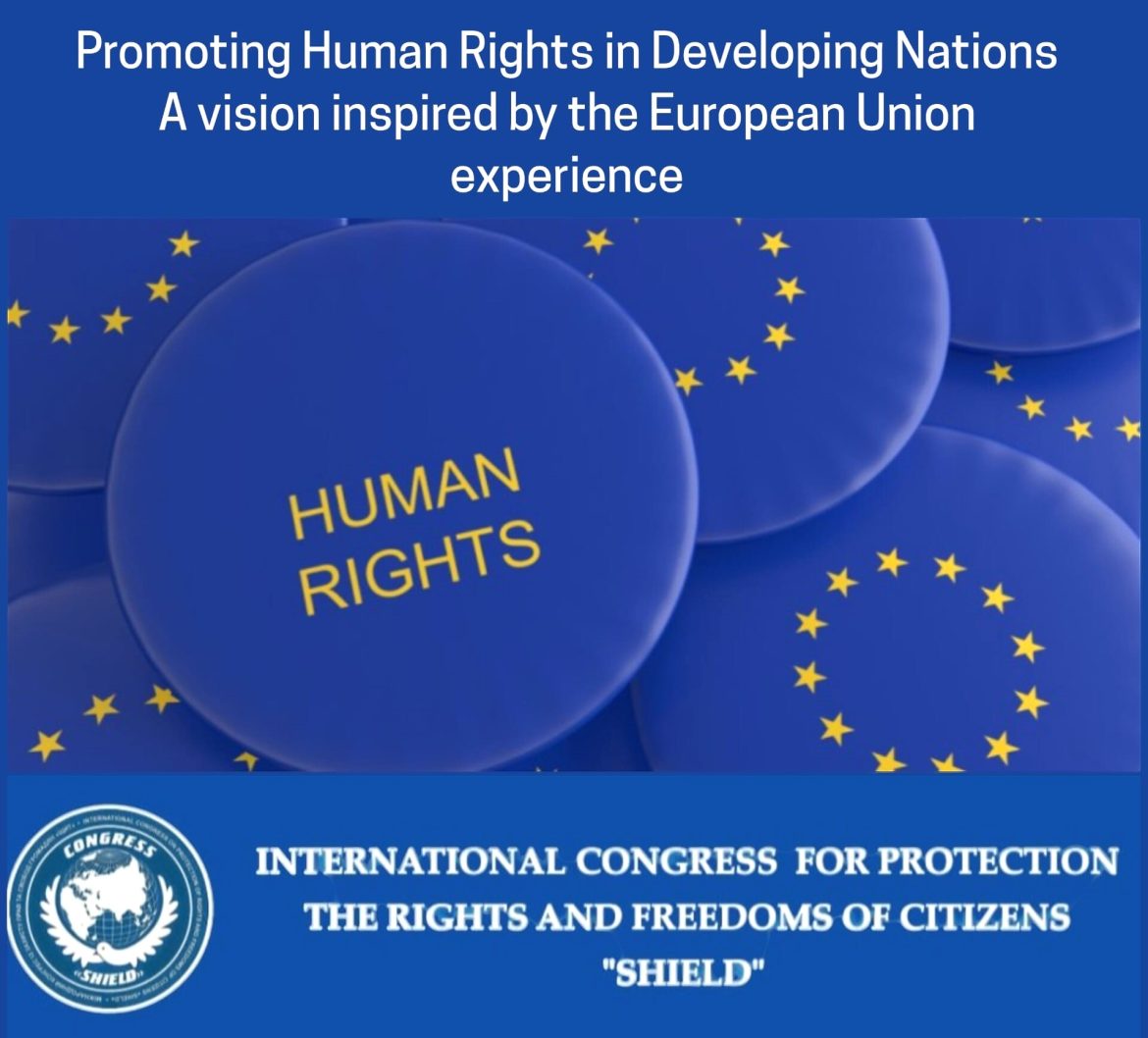
A Perspective by the Shield International Organization
Introduction: The Importance of the European Human Rights Model
Safeguarding human rights and public freedoms is a cornerstone for building prosperous and sustainable societies. The European Union (EU) stands as a global exemplar in the protection of human rights and human dignity, thanks to its cohesive legal and ethical framework.
The Shield International Organization, led by Dr. Saleh Muhamed Daher, emphasizes the significance of learning from this model to establish robust human rights systems in developing nations, especially those facing challenges in building the legal infrastructure necessary for sustainable development.
The Shield International Organization’s Vision: Learning from the European Model
1. The EU’s Dynamic Approach to Human Rights
The EU demonstrates that human rights are not merely moral obligations but fundamental principles in policymaking. Its comprehensive laws and effective institutions provide a model for developing nations to build inclusive and enduring human rights frameworks.
2. A Holistic Perspective
Through its rights-based research and advocacy, the Shield International Organization believes that enhancing rights and public freedoms in developing nations requires drawing inspiration from the European experience while respecting the unique characteristics of each society to ensure success.
Key Principles of the European Experience: Lessons for Developing Nations
1. Prioritizing Human Dignity
- In the EU, human dignity is not only a moral value but a legal principle ingrained in all legislation and policies.
- Developing nations should adopt this approach by enacting laws that protect human dignity and promote social justice.
2. Balancing Individual and Collective Rights
- The EU serves as a clear example of how to safeguard individual rights, such as freedom of expression and belief, while ensuring harmony with the common good.
- Developing nations must establish systems that integrate rights rather than compromise one set of rights for another.
3. Mechanisms for Accountability and Protection
- The European Court of Human Rights is one of the foremost institutions ensuring the implementation of human rights agreements and holding violators accountable.
- The Shield International Organization advocates for developing nations to establish independent national bodies to monitor and report on human rights transparently.
How Can Developing Nations Benefit?
1. Building Strong and Sustainable Legal Frameworks
- Developing nations should adopt national legislation inspired by European principles while tailoring them to local cultures and social contexts.
- Ensuring judicial independence to uphold justice and equality before the law.
2. Promoting a Culture of Human Rights
- Developing nations must work to instill a culture of human rights and public freedoms across all segments of society.
- Integrating human rights concepts into educational curricula.
- Launching awareness campaigns to educate citizens and officials on the importance of rights and freedoms.
3. International Cooperation
- Collaborating with international human rights organizations, such as the Shield International Organization, can facilitate the transfer of European expertise to developing nations.
- Strengthening partnerships with the EU to obtain technical and legal support for building effective human rights systems.
4. Linking Development to Human Rights
- The organization underscores the interdependence of human rights and development; sustainable progress cannot be achieved without fostering social justice and respecting freedoms.
- Investing in health and education to improve quality of life.
- Combating corruption to enhance transparency and ensure equitable resource distribution.
The Role of the Shield International Organization in Supporting Developing Nations
Through its extensive experience and expertise in human rights affairs, the Shield International Organization offers support and insight to help developing nations create effective human rights systems.
1. Raising Awareness and Building Capacities
- Organizing workshops and training sessions for policymakers and civil society to transfer European knowledge and practices.
2. Supporting National Institutions
- Assisting in the development of independent national institutions dedicated to protecting human rights and enhancing transparency.
3. Promoting Human Dignity Awareness
- Launching international and regional campaigns to highlight the importance of human dignity and its role in achieving sustainable development.
Challenges Faced by Developing Nations: How to Overcome Them
1. Weak Human Rights Institutions
- Solution: Enhance institutional infrastructure with the help of international organizations and technical expertise.
2. Limited Public Awareness
- Solution: Conduct widespread media campaigns and introduce human rights education programs.
3. Lack of Political Will
- Solution: Leverage local and international pressure to ensure governments commit to advancing human rights.
Conclusion: The European Model as a Global Human Rights Benchmark
The European Union’s experience in human rights provides an integrated model that combines individual protections, social justice, and the preservation of human dignity.
Through its research and advocacy, the Shield International Organization calls on developing nations to draw inspiration from this model and work toward building national systems that uphold human rights and protect public freedoms. Achieving this is not only a moral imperative but the foundation for ensuring stability and sustainable progress in developing societies.